Thursday, 5 May 2016

EVALUATION

Evaluate  your  own  contribution  to  the  whole  final  piece,  reflecting  on  how  you  worked  as  part  of  an ensemble and how your role contributed to the whole piece.

I contributed consistently throughout the development by adding comments and helping ideas be explored. However, my biggest contribution to the final piece was the moment when we all walk and attempt to fit onto one spot of floor. This was taken from the smaller group piece in which I had a large part in creating in another rehearsal. My contribution was more evident throughout the development period as we worked on that moment for the overall piece quite extensively. Though we didn't end up using the entire moment - the absence of Robin in rehearsals meant that it was difficult to do so - we built on from it to develop it in a way that would work for the piece whilst matching the theme. I wish we would've been able to actually use the entire moment with Robin but at that late on in the rehearsal process, we didn't have much choice other than quick thinking. I think as a ensemble we solved the problem efficiently and were able to move on with our rehearsals. 

This contribution had a large impact on the final piece's structure. It allowed us to move from the partner work to floor work with ease. Without it, the piece wouldn't have flowed as well as it did and the structure would've been stifled. Furthermore, the movement I helped create wasn't movement for the sake of movement to make the transition look good - the roots of the piece's development were from Ellie's interview which we had also used in the duet work. This meant that moment was authentic to the production's sensitive theme rather than just plain choreography. I wish we were able to explore the idea of a mass group of people moving towards one place or attempting to stay in one place in greater detail as this was the idea I was attempting to interrogate with the pedestrian moment of the piece. 

Another significant contribution I played was with the development of looking at the ideas surrounding censorship and being politically correct. I brought one of my recorded interviews to class which opened up a discussion on my friend's comments about not paying more attention in geography class. This opened up a dialogue in class about the public being unable to define the words 'migrant' or know the difference between 'asylum seeker' and 'refugee'. We were able to use this to build on our ideas about people trying to be PC by twisting their own definitions of the words so not to offend anyone. This contribution was significant to the final performance as our piece mainly revolved around being PC and/or not being closed minded about the entire crisis. I was able to contribute through my recordings which I could use to build ideas from and help shape the final piece. 

I believe I worked well in our ensemble, especially during the more difficult moments during the rehearsals. Many of the cast were reluctant to cooperate, focusing too often on the negative side of things, making it a lot harder than it needed to be when developing work. However, I believe I was one of the more proactive members of the cast. This is because I attended every rehearsal, recorded multiple interviews and brought in articles for stimulus during different sessions. This meant I had a large range of material to work from which allowed me to develop myriad ideas that I was able to bring to the table. If given a second chance, I would have liked to have had a louder voice in the development of our piece both creatively and motivationally. This was probably the biggest area of my own personal failure because as the group was so large all trying to create one piece, it meant that some people's idea's got drowned out. I should've been more active in really pushing to explore some of my own ideas that I didn't end up suggesting. However, despite this, I believe our ensemble work in the final performance was a success. It took us a long while to get there, even up to the last minute, but I think we managed to tell the story we wished to tell successfully and efficiently. 

Overall, I wish the rehearsal period had run a lot smoother than it did. But, in the end, our goal was to create a piece of theatre about mass migration and I believe we did. We effectively explored different varieties of migration - the bird/floor bit, the current crisis - as well as the different responses - 'i think all migrants are [beep]' or 'i don't read the daily mail' in ways that were exciting and physically engaging. I wish we were able to actually put on the original show we were going to but I understand why we didn't. 


Wednesday, 27 April 2016

Big group piece

From our interviews and the idea of people trying particularly hard to be politically correct, we created the first part of our piece. I really like this moment, it allows us to shed light on a different side of the current issue of migration. We're able to keep it relevant with the subject matter by linking it back to the current crisis whilst observing and exploring it in a different way. The action of us all running to cover someone's mouths whilst they're talking really shows the pressure some people feel to constantly be PC. I feel like maybe we should edit some of the dialogue people say in this section to make it less blatantly racist. This is because I feel that some people could possibly think we are giving racists a platform to spur hate rather than make a point about

I really liked that we were able to include Ivory and Jasmine's running into the big group piece. I thought the piece they created was extremely poignant. With the entire group doing it, if it's done well, it looks really good. It provides us all with an individual platform to each tell a different story of someone who may be fleeing their home in a way that isn't generic and moving for the sake of moving.

Incorporating Isabella and Imogene's duet work was slightly harder as the movements were more intricate and precise. It was harder to get everyone working at the exact same time to the interview whilst doing the correct movements but we all definitely improved over time. I really like the idea of relying on someone else to safely take your weight being explored in this moment. This allows us to present the idea that we, the UK/Europe/the World, have an obligation to help those in need. We have the ability the take the weight of those who have fled their home - it's just the question of whether or not our government are brave enough to do the right thing.

The last part we developed was taken from the group piece we developed previously. This involves all of us walking around before all trying to fit onto one piece of floor. his was taken from Jasper's interview with Ellie in which sure uses the word 'crush'. We thought this was an extremely visceral word that pushed us to look at the idea of a mass group of people attempting to all fit onto one small space. Not only would this show the idea of a mass movement of people towards the same thing but it would also look at the idea that some people possess that we, as a country/continent/world, do not have enough space to take in any refugees.

Sunday, 24 April 2016

  • asylum seekernoun, 'a person who has left their home country as a political refugee and is seeking asylum in another'.

  • migrantnoun, 'a person who moves from one place to another in order to find work or better living conditions'.

  • immigrantnoun, 'a person who comes to live permanently in a foreign country'.

  • refugeenoun, 'a person who has been forced to leave their country in order to escape war, persecution, or natural disaster'.


Looking at the actual definitions of the words will definitely be helpful in our physical development as it will ensure we keep linking back to the truth behind what we're looking at. It'll be really interesting to perhaps contrast the google definitions of the words with our interviews and what others may think they mean. 

It's also helpful in general to know what each of these terms mean as in recent history they've become interchangeable and our actual process of development will be made ten times easier if we were well informed. 

Interviews

The best interview I collected was from my friend Jake. This is because he gave the most interesting and less generic answers in comparison to everyone else that I asked. Answers that are different and hold more truth have the most to work from and I feel like there are multiple aspects we could build from using Jake's interview.

Before he even answers the first question, 'can you summarise in the three words the characteristics of migration', he asks 'can it be bad?' - checking whether or not he was allowed to possibly offend anyone with his answers. This was very different from the other people I also spoke to who mostly skirted around offending anyone with the language they used. Furthermore, when asked what the definition of migrant was, he answered "Is it bad I just thought of illegal?" this statement is pure gold when looking at it from a devising point of view. The idea of censoring yourself around other people to remain PC can be explored in so many different and interesting ways physically - it's also a very controversial statement to make, especially in this day and age. This then poses the question - who's the one censoring us?; Is it the social pressure to not offend anyone?; Is it your own guilt/discomfort over what you really think?; Is the first thing that pops into your mind what you actually think or is that just an impulsive thought? All these questions present different and interesting answers that we could explore and weave back to link with the current issue of migration.

His response that 'This is so bad, I should've paid more attention in Geography.' stuck out the most for me as he really presented the lack of understanding some people have about current issues. It's not even ignorance, the words 'refugee', 'migrant' and 'asylum seeker' have become somewhat interchangeable and can become confusing to tell the difference. The average person may always think of the same group of people when asked what one of those mean; someone fleeing from war and coming into the country either legally or illegally. The distorted or in-the-dark view that some people have when it comes to migration could be something we explore physically - it would be interesting to contrast what people think they mean with the actual definition.

Monday, 11 April 2016

Group & Duet Piece

Using Jasper's interview with Ellie, we picked out the fact she was saying all the migrants coming to our island (UK) isn't going to crush us.

We decided to look at the idea of a large amount of people attempting to all fit onto one space, this was slightly hard for us as we didn't have anything to actually mark the spot when devising but we were able to come up with the framework with the piece. We decided to show some elevation by holding Robin up, this was to explore the country holding up the weight of all the extra people. One by one we dropped away so she was left without supporting. This was to explore how so many countries have turned their back on the migrants and closed their borders.

I think the piece definitely has potential and I would like to develop it further to make the movements more precise and choreographed as it's currently quite messy. I also think we should prolong the moment when everyone is struggling to fit onto that one spot as I think it could look really effective - especially with the entire class doing it.

Moreover, Isabella and Imogene worked on a duet piece using the rest of Ellie's interview. It revolved around sharing each other's weight - which ties in perfectly with our larger piece. These two pieces can work side by side or separately as they're both about the same subject.

Though both pieces definitely need a lot of development, we're in a better place than we were previously.

24/03/16's Lesson

I feel the piece we began to develop as an entire class - the slow motion running - could definitely be extremely effective if we work on refining it. I really liked Jasmine and Ivory's initial ideas for the piece - contrasting it with loud footsteps underneath, allowing individual stories to be played out, the quick running at the end - and I think it could be very powerful once it all comes together.

Working with TJ to establish a father/daughter relationship was interesting as we wanted to explore a different way two people in that situation with that relationship would react. We tried hard to show how protective a father would be of their daughter however, this was slightly hard to do in slow motion - especially the moment he picked me up. This is because it caused him to lurch slightly to carry my weight and he couldn't properly control his movement.

The slow motion movement really allows us to explore the different stories individually as it prolongs a moment that is usually done quite quickly. It's extremely hard to control your movements so you have to be fully committed to make sure it doesn't look bad. 

Saturday, 26 March 2016

Piece with Sonia and Robin

Using the poem "Home" by Warsan Shire as stimulus, we developed a piece looking at the idea of how our a place of comfort - like your home - could turn on you and become unstable;

"no one leaves home until home is a sweaty voice in your ear
saying-
leave,
run away from me now
i dont know what i’ve become
but i know that anywhere
is safer than here"

We felt the most effective way to show this was through the innocence and obliviousness of children - a lot of the children who have been caught up in migration, will not know what they're running from or where they're going. All they know is that they can't go back home. We explore the simplicity of children playing a game of hopscotch that would then morph into something darker - a minefield and escaping bombs. This was to show how a simple game you play as a child can be distorted by war. 

As we were looking out sounds this lesson, we decided to contrast our piece with the sounds of children playing in a school playground. This is a sound that everyone who has gone to school or lives by one, recognises - it's a very familiar sound of everyone's childhood. Furthermore, it highlighted how safe you feel as a child in your playground compared to how unsafe the conditions the children running from war torn countries have to play and live in. 

It would be quite hard to involve everyone in this piece, however we did question perhaps involving the audience in a game at the beginning before splitting off and performing but we didn't get round to rehearsing that properly. 

Tuesday, 22 March 2016

Piece With JJ

Using this FOX News article as stimulus, JJ and I wanted to explore the idea of welcoming something only to turn your back on it. This was boiling down the main idea the article was presenting into it's simplest forms. We decided to do this through using a scrunched up piece of paper - representing the war torn migrants who had fled from their home country. This was our way of attempting to get our story across without being too literal. We then unfolded the paper carefully to represent the surge in volunteers and countries beginning to welcome refugees across their borders. This was our attempt to show 'protection'. However, as the last few months have gone on - a surge of anti-migrant protests and right wing groups have gained popularity, especially after the attacks in Paris and Brussels. We then scrunched the paper back up and tried to get the other to take it - this was our way of showing the idea of 'it's not our problem' - an ideology that many people seem to possess.


In 17/03/16's lesson we decided to try and develop the piece without using the paper or words - making it purely physical. This meant that we really had to tap into what we were trying to explore and the very basics of what 'welcome' and 'enough' means and how to portray that. I feel we did this quite successfully as we did not have a lot of time but we were able to have a piece that was ready to perform (despite not performing it). I would like to expand and develop that piece further as it has a lot of potential, I believe, as a piece on a whole.

Monday, 14 December 2015

Evalutation of assessment performance

Overall, I feel my performance went well, considering how nervous I was before hand - I didn't let it effect how I moved. As I was performing in a much bigger space than i had been rehearsing in (my bedroom), it meant I was able to express my movements fully.

I believed I carried out all of my movements successfully, I had no major mistakes or mishaps that hindered my performance. This is a big achievement for me as although I had rehearsed the piece over and over, I'm not the most graceful and so there's always the natural fear of making a huge mistake in front of everyone. However, I feel I performed with fluidity and with enough confidence to carry the piece.

An aspect I had been worrying about was my speech. I stumble quite a bit when I talk if I'm nervous another issue I have is that I tend to talk quite quickly - I put a lot of effort when I was rehearsing into slowing down my speech and really working on being clear and I feel that was successfully evident in my performance. By putting the effort into making sure I spoke clearly and with clarity, I was able to ensure that my piece ran smoothly and without hiccups - this was a big success for me.

The main aspect I feel I could've improved on is my timing. It felt like it was just a little bit too short - shorter than it had been when I was rehearsing it, and I feel mainly that was because of how nervous I was. I tend to go quite quickly when I'm nervous. If I had more time, I would've liked to have done more research and development on the verbatim side of the piece - find video recordings of refugees and interviews - so I could really try and capture their voice and movements through verbatim.

In conclusion, I am very happy i was able to push myself into doing a solo piece as I was completely dreading it at first. I would've liked to have expanded it to being slightly longer and maybe with some props, but I feel my performance worked fine without it. I kept my energy up and I don't feel at any point it dropped to being stagnant or boring.

Tuesday, 8 December 2015


As my piece is verbatim, I went back and looked a the previous work I've done using verbatim pieces - mainly, my group physical theatre piece from last year as well as the work we did on Nadia Fall's Home and various productions by DV8. I love working with verbatim and other people's words as it really feels like you're giving someone a proper voice - though this is more difficult with my stimulus for this project as I don't know how my speakers said the words or their tone of voice, I'm still trying to be as authentic as possible.

In particular I looked at DV8s production of JOHN - a verbatim piece of physical theatre. It was extremely useful to research this as I was able to grasp how they combined one man's story with bold and interesting movements that told it extremely truthfully.

In an interview about their process with creating JOHN, David Grewcock - Assistant to the Director and Company manager stated at one point that they:  "We put the ‘finished’ edits of the interview audio recordings onto iPods and the dancers then repeat the words they hear back in real time as they improvise or complete physical tasks in order to generate material."  
This is a similar process to the one I took as though I didn't improvise using recorded word to improvise with, I did repeat my lines over and over as I developed my movements to ensure I always stayed on task and stuck with what I was really trying to say behind the lines rather than moving for the sake of it. This was very useful as it allowed me to really pinpoint and work specifically at developing movements for those particular lines rather than just generalised movements for the theme.


Techniques

I mainly used DV8s technique of working from the inside out - developing the feelings and drive behind the movements and then using them to develop and devise the work. This meant everything I created had a purpose and objective behind to colour it. It wasn't moving for the sake of moving. I worked from improvisation, using my stimulus to drive the movements rather than planning from beforehand. I went through different routines over and over to find different segment of movements that I felt work.

I looked at using different levels when improvising - working on the ground, doing smaller movements through one run then looking at bringing it up from the floor and using bigger movements. This meant I was able to develop a range of different movements and sequences that I was able to combine and experiment with, nothing was too same-y.

I did however also explore Frantic Assembly's routine of creating the movements and then adding the words on top - though in less detail. This was through the improvisation I did at the beginning by simply working on top of the news report I used as my background sound. Once I found a set of movements I liked from my improvisation, I developed them into more set and precise movements and then added the lines on top - rather than using the lines to develop the movements. Though I may not have used them in my final piece, it was very useful to explore the different aspects I could undergo to create my piece as it allowed me to have access to a large range of different movements created by different techniques that I could insert into my piece.

Scratch performance

From my scratch performance I mainly got positive feedback from everyone who spoke. I need to on something that always troubles me with performing - talking too quickly when I get nervous. I talk quite quickly naturally and I have to put a lot of effort into forcing myself to slow down and speak clearly when I'm performing.

Isabella gave me a note saying I should experiment with my piece on whether or not it works with the news report in the background. I went though my piece at home multiple times at home without the news report in the background but it didn't sit right with me. I want to show the contrast between the news report - an outsider looking in and the actual quotes from refugees.

I was told that my movements were delicate - this is a surprise to me as I definitely to not see myself as a delicate or graceful person but I feel (if it's true) that I could definitely use it effectively to power my piece. I want to really show the contrast between the delicate movements and the gritty, awful, real life things these poor people have experienced. This also gives me an incentive to create moments in the piece that aren't delicate or graceful - moments that are bold and angry - this is to try and extend my range of movements in the piece to ensure it's as interesting and vibrant as possible.

Sunday, 15 November 2015

After performing my piece to the class and getting mostly positive feedback, I'm feeling a lot more confident with it than I was previously. I'm going to experiment without using the backing of the news report and see which one I feel fits best. I've also been doing more research into the issues the quotes I'm using deal with - eg: life in Mosul.

By doing this, I'm able to get a better idea of what they're talking about - I will not by any means be able to understand even a 0.1% of what they're going through, but I would like to try and gain a better understanding.

I'm going to work on really trying to push what I'm trying to show - the lengths these people have gone through to escape and what they're escaping. I'm trying to do it as respectfully as possible.

Mosul

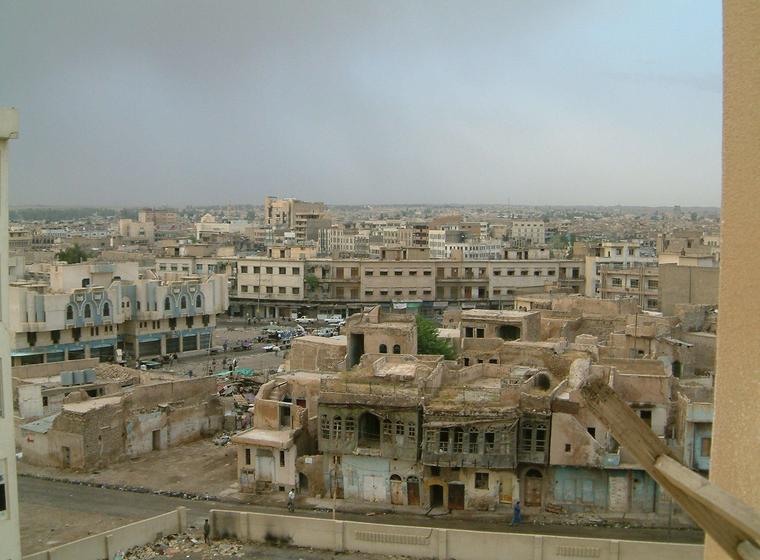
Mosul, a city located in Northern Iraq has been occupied by the Islamic State since the 10 June 2014.
Normally, the city would be home to 2.5 million - however, since the take over half a million have fled. Furthermore, it as once home to 60-70 thousand Chaldean and Christians, now there are none. Since the occupation, phone lines have been cut and all internet access destroyed.

"Life in Mosul is one of violent oppression where people suspected of activism against the occupiers, resistance activities, homosexuality, promiscuity or adultery are brutally and summarily tortured and murdered."

"IS takes a quarter of everyone's salary as a contribution towards paying for rebuilding the city. People can't say no because they would face harsh punishments. The group controls everything. Rent is paid to it and the hospitals are for its members' exclusive use."

Women have to be accompanied by a male at all times and are forced to cover themselves head to toe. Men are forbidden from shaving their beard and receive severe punishment if they do. Public executions have been known to be taking place since 2014, anyone who goes against ISIS' word is denounced and punished. 

Monday, 9 November 2015

Syria became home...

To the Armenian refugees in 1915...
To the Palestinian refugees in 1948...
  • In 1948, the Palestinian exodus occurred when 700,000 Palestinian Arabs fled or were expelled during the 1948 Palestine War. The initial influx of Palestinian refugees was between 90,000-100,000. Through different laws the government paved the way for Palestinians to be integrated into their society whilst remaining this Palestinian identity.  
To the Iraqi refugees in 2003..
Though there are many instances of Syria acting as salvation for those seeking refugee, I thought I would highlight a few to show that now, when Syrian's need help, they're being treated as a problem. They're not the problem, the problem lies with what's causing them to flee - why is their homeland so unstable, who allowed to get this way? The problem lies with our world leaders bickering over what to do with millions of homeless refugees trying to seek safety in our privileged countries - if we were in trouble, they would expect help. 

"Let it be written in the history books and let the generations remember, that when a Syrian needed help and refuge; borders were closed and the world looked away."
Taking Simon's advice with splitting up the piece, creating them separately and stitching them together afterwards, I summed each of the passages from the refugees up by one word or phrase. By summing my 4 passages I'm going to use for the verbatim aspect of my piece with one word, I'm able to give myself more detail to work off of. Though it arguably makes my job of creating the piece simpler, it also gives me a single word to build my objectives around which I feel will help me devise and create more effectively.

My passage of taken from HONY is a Iraqi refugee from Mosul in Salzburg, Austria. They talk about how they tried to avoid trouble but were reported by their neighbour "for shaving my beard" which caused them to be labelled as an atheist and lashed in the city centre. My obvious aim for this section of my piece to portray to the best of my ability someone possibly being trapped and punished for something so trivial - working off of the objective to be free and escape.

My second passage taken from HONY is from a refugee with unknown origins in Hegyeshalom, Austria. They explain how the war has impact his children and how it's changed their psychology - their normality is war. My aim with this second part is to discuss how the normality of war can impact people's psychologies in such a way that is irreparable - specifically with children.

My third passage taken from HONY is a refugee from Afghanistan - in Kos, Greece - who's family had to flee due to the Taliban. He explains how when the police found him and his family in Turkey, "they treated us like animals...like we weren't human." This third section I want to use animalistic movements to highlight the treatment of refugees and their experiences. We're discussing their lives as if they're a problem, as if they're sub human. They're not a problem. They're humans who are in need of grave help.  

My final passage taken from is refugee from Baghdad, in Salzburg, Austria, who had to leave as they heard "the militas was planning to kill me" - They had leave without their family, "I'm all alone here". In the final part, I want to explore the loneliness felt by the refugees. Though thousands may have travelled with their family, there are still thousands who didn't. Thousands split from their family and their homeland due to conflict. Though there are millions travelling to and through Europe, they've all had different experiences - experiences no one else will ever have to go through like they did - that can be in no doubt, extremely lonely.

Friday, 23 October 2015

I started my practical rehearsal process by using this video as a background a stimulus to help drive and inform my movements, I feel its easier and a lot more affective to use something like this related to the overall subject rather than just a piece of music.

As I was devising I found that a lot of what is said in the video actually does relate back to some of the points I am trying to make in my piece. In particular, it touches on different past movements of people - this relates to the text I found explaining all the different moments in history in which Syria played refugee to those fleeing. It also touches on after the break up of Yugoslavia that Britain took in over 84,000 asylum seekers in 2002, and yet now the government are only talking about letting a tiny percentage of that in.

This video also explores how the crisis has affected other European countries - not just Britain as I think it's very important for us to remember that we're all in this together and we, as a mainly privileged continent, are obliged to help those in need.

Thursday, 22 October 2015

Humans Of New York

Brandon Stanton started a blog in 2010 featuring portraits and stories collected on the streets of New York City, he quickly gained a large internet following and as of October 2015 the HONY facebook page had 15.6 million followers. When given the brief to created a solo piece of physical theatre involving the migrant crisis, I remembered that not only does Stanton feature New Yorkers, but that he travels regularly and recently he had travelled to the migrant communities in various countries like Austria, Hungary and Greece. As someone that loves exploring verbatim to perform and create work with I feel that with using these migrant's stories and actual words to drive my piece will allow it to have an element of true authenticity.


I chose these four particular stories as not only did they resonate with me emotionally through the harrowing events these people have had to go through, but it also shows the range of lifestyles these migrants lived before they had to flee and furthermore the conditions they were forced to live in before they did. There's also a range of ages included, for example the words from a 62 year to a father talking about his young children - it shows that it doesn't matter how old or who you may be, you will be affected greatly by whatever force is causing you to flee your home, whether it be civil war, terrorism or something completely different, it will affect you in some way. I want to give a voice to the events these people have had to go through to just to get to Europe's shores only to be labelled as animals and benefit scroungers, I want to use their original words to be as truthful and respectful as possible.